
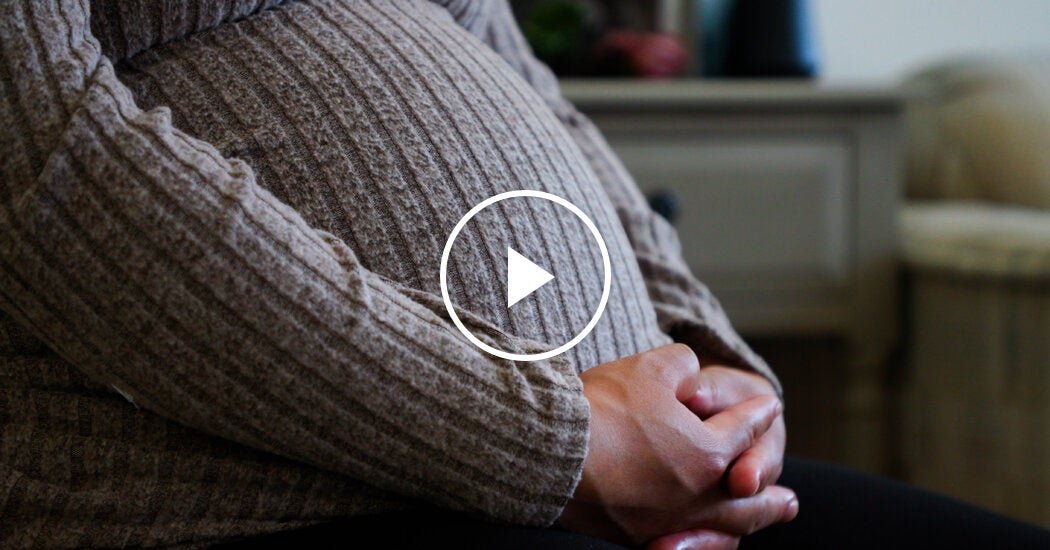
“Have you noticed that I kept looking back, and I have been looking and seeing if there are any cars following us?” We’re in Minnesota, where Fernanda is trying to reach pregnant women hiding from ICE. “Because the last thing that I heard is that ICE is targeting people that are dropping off food.” Fernanda works as a midwife, but on her days off, she volunteers to bring food and baby supplies to expecting moms like Ana, an undocumented single mother of two from Mexico. Out of fear of being targeted, Ana asked not to be identified. Health providers across Minnesota have reported ICE present in at least 11 different medical centers in the past month. This video from Jan. 21 shows agents pinning down and detaining two people outside the Whittier Clinic in South Minneapolis. After seeing agents near her clinic in early January, Ana switched to virtual appointments in her last weeks of pregnancy. “My biggest worry: We are going to miss something, that there’s going to be babies that are going to be too small, moms with diabetes. I fear that moms will develop high blood pressure and end up with seizures.” Now, at 35 weeks pregnant, Ana is reconsidering her birth plan. In 2021, ICE set a new policy exempting pregnant, postpartum and nursing mothers from being detained outside of quote, “exceptional circumstances.” But The Times has confirmed at least two cases of pregnant women being detained by the Trump administration since November. The Department of Homeland Security told The Times that, quote, “pregnancy in ICE detention is exceedingly rare,” but did not address the 2021 policy. In reference to the two cases, D.H.S. claimed that both women entered the U.S. illegally and stated that pending asylum cases do not confer legal status. For Ana, not knowing whether she could be targeted by ICE has meant quitting one of her two jobs to avoid being outside during the day. With the loss of income combined with being afraid to leave her house, Ana struggles to get what she needs to prepare for her baby. While home births can be a safe option for mothers who have prepared, for others, there are serious risks to consider. “They have to be in a sterile place. The baby needs to be able to breathe. Somebody has to be checking that the baby is able to move, that they don’t have an infection. If they decide to do this without the supervision of a health care provider that is used to doing home births, it will be catastrophic.”
