
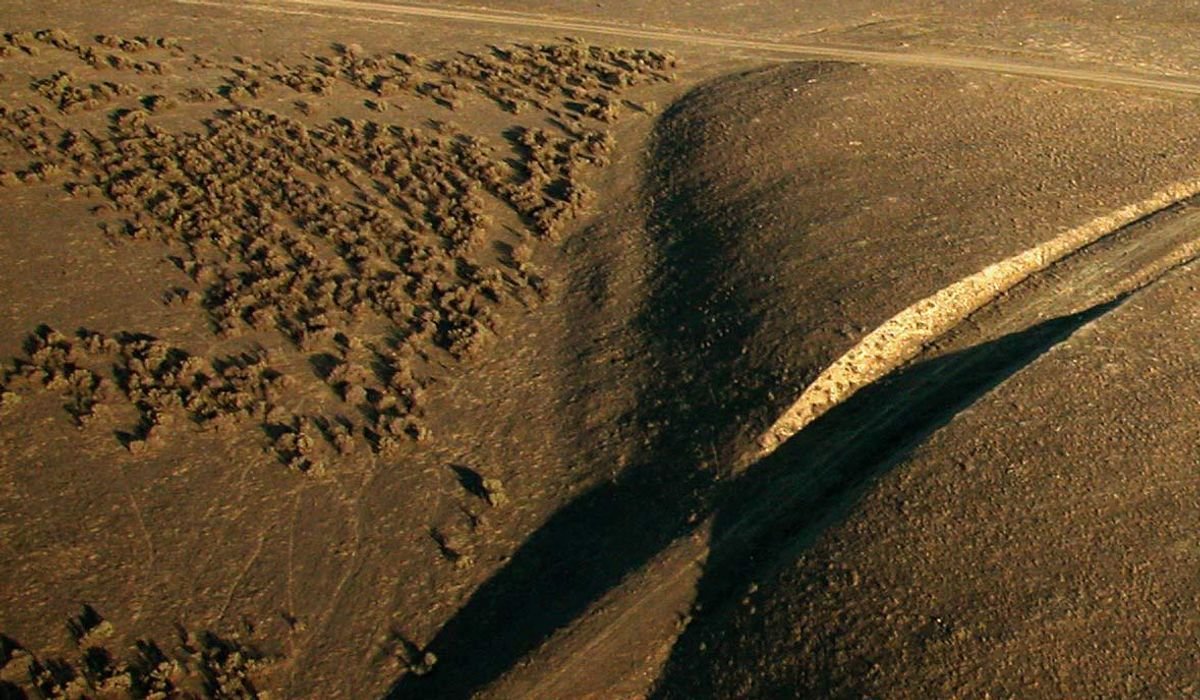
Researchers found in a new study that California’s San Andreas and San Jacinto tectonic faults are at their highest stress levels in 1,000 years.
Lead author Liliane Burkhard said in a release from the University of Hawaii at Manoa that “stress levels on multiple fault segments are now at or above the highest values seen in the past millennium and that the region may be capable of a large through-going rupture involving both fault systems.”
The study, published in the Journal of Geophysical Research: Solid Earth, explains that the last major earthquake, or Big One, was the 1857 Fort Tejon earthquake along the San Andreas Fault, which stopped just north of Cajon Pass, which is 50 miles northwest of Los Angeles and connects the San Andreas and San Jacinto faults.
If it happened in modern California, the Fort Tejon earthquake, which officially killed only two people, would cause billions of dollars in losses and large-scale deaths, according to the Southern California Earthquake Data Center.
The study’s authors explained that, while the magnitude 7.9 Fort Tejon earthquake did not go through the Cajon Pass, they hypothesize that the magnitude 7.5 1812 Wrightwood earthquake went through the pass and affected both faults.
That earthquake killed about 40 American Indians attending mass at the San Juan Capistrano mission, according to the Southern California Earthquake Data Center.
