
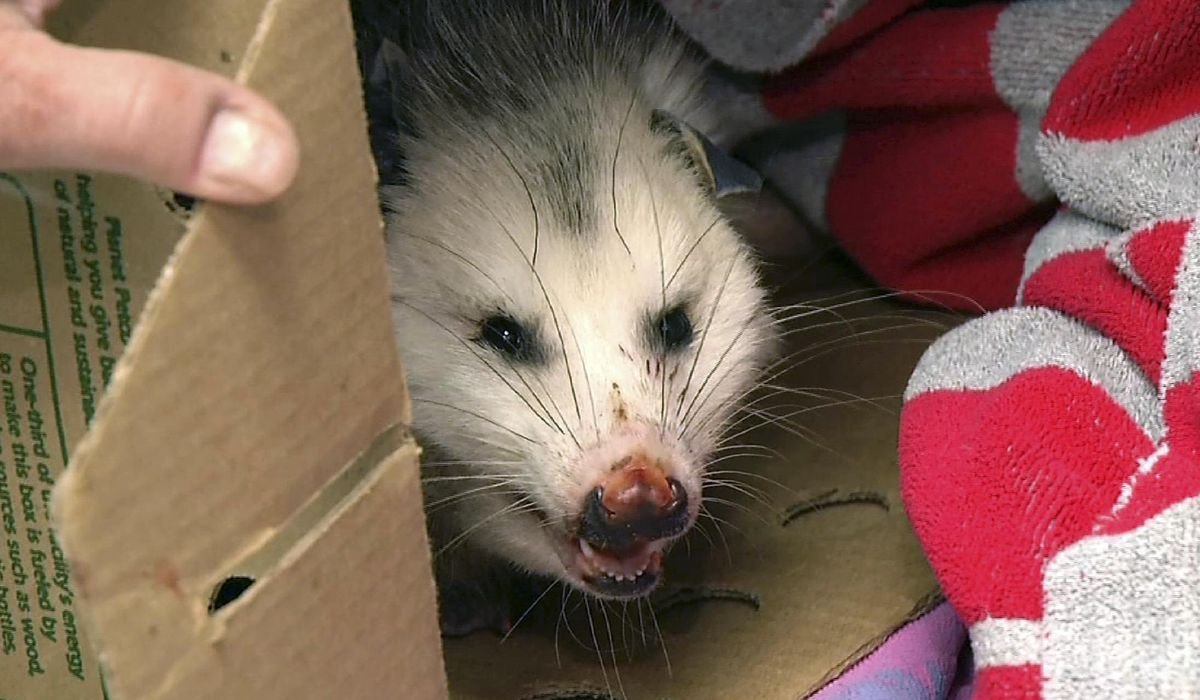
Florida wildlife researchers have found an unlikely ally in the battle against invasive Burmese pythons: the opossum.
Opossums are a key food source for Burmese pythons, which are top predators in the Everglades and have established a permanent breeding population in South Florida, severely harming the ecosystem by wiping out native animals, according to the Conservancy of Southwest Florida.
The technique was discovered accidentally in 2022 while researchers were studying the movements and behaviors of small mammals. The team had fitted GPS collars to opossums and raccoons on Florida’s southern coast and found an unexpected bonus — they could also track the enormous snakes after the animals were swallowed whole.
Biologists A.J. Sanjar and Michael Cove, working at the Crocodile Lake National Wildlife Refuge in Key Largo, have since expanded and refined the program. The cost of tracking collars dropped from $1,500 to $190, allowing researchers to equip 32 opossums so far, with a goal of reaching at least 40 by later this summer.
The collar system works in four steps, according to Treasure Coast Newspapers: The device records the animal’s location and movement; if the opossum remains motionless for more than four hours, researchers are notified it has likely been killed; because pythons digest slowly, the collar continues to transmit; once the snake is located, it is euthanized and the collar is cleaned and reused.
Although the use of live prey has drawn public criticism, the scientists emphasize they are documenting natural predation, not manufacturing danger.
“We’re not putting these animals out there and in harm’s way,” said Jeremy Dixon, manager of the Crocodile Lake National Wildlife Refuge. “Harm’s way is there. We’re just documenting what’s happening.”
Burmese pythons have reduced raccoon populations in Florida by 99%, opossums by 98% and bobcats by 88%, causing what researchers describe as a massive ecological collapse in the Everglades. Biologists first detected the predators specifically in Key Largo in 2007 — well after the snakes established themselves in Everglades National Park — and snake captures there have risen steadily while sightings of possums, woodrats and cotton mice have declined, CBS12 reported.
A U.S. Geological Survey report shows that Burmese pythons are expanding their range so quickly that the advance can be measured in miles per year in some areas.
The first wild Burmese python sighting in South Florida was recorded in 1979 in Everglades National Park. The heaviest python ever caught in Florida — an 18-foot, 215-pound snake — was captured by a biologist with the Conservancy of Southwest Florida in Naples in 2022. The longest, caught in July 2023, measured more than 19 feet. Since their arrival, the snakes have brought harmful non-native parasites and reduced medium-sized mammal populations by more than 90%, according to Popular Science.
This article was constructed with the assistance of artificial intelligence and published by a member of The Washington Times’ AI News Desk team. The contents of this report are based solely on The Washington Times’ original reporting, wire services, and/or other sources cited within the report. For more information, please read our AI policy or contact Steve Fink, Director of Artificial Intelligence, at sfink@washingtontimes.com
The Washington Times AI Ethics Newsroom Committee can be reached at aispotlight@washingtontimes.com.
